CHAPTER: WE ARE ALL SARAH OR ISRAEL. Erste Hilfe bei Unfällen (First aid in case of accidents)
The centuries-old, multicolored matter of which society is composed has a heterogeneous character, both in texture and in composition. In turn, the state, as an anatomical set of internal organs that supports the life of the body, solves the problems of functioning within a complex relationship with the surrounding world.
It is easy to imagine what could happen if one of the organs were to be amputated, damaged, or physically destroyed. The subsequent death of separate parts will reveal in a new way their functional mode of involvement in the processes of complex survival and rapid self-destruction.
At the same time, by forcibly eliminating historical experience from human memory, which reveals the evolutionary purpose of certain ethnic groups we risk losing the opportunity to hear the voice of common sense, perhaps coming from the next room, or even from behind us. Under current conditions, questions that are rooted in the depths of our inbred intolerance are capable of giving rise to an extremely unlimited anger towards everyone who, by some criteria, may be different.
Certainly, it is necessary to experience a kinship of sensual aspirations, an encouraging, perhaps even intoxicating attachment to personal transparency. Indeed, individual integrity allows us to make out the complex neural weaving of our uniqueness.
Perhaps a direct glance through a transparent surface will help us to see our own pupils, in which our fears and hidden desires are mixed up like in a children’s kaleidoscope. It is vital to see what was hidden from us; it is fundamentally important to say the things that were not spoken out loud before. Maybe then, we will be able to find the answer to the fundamental question of how to live not only together, but also with someone who does not look like you?
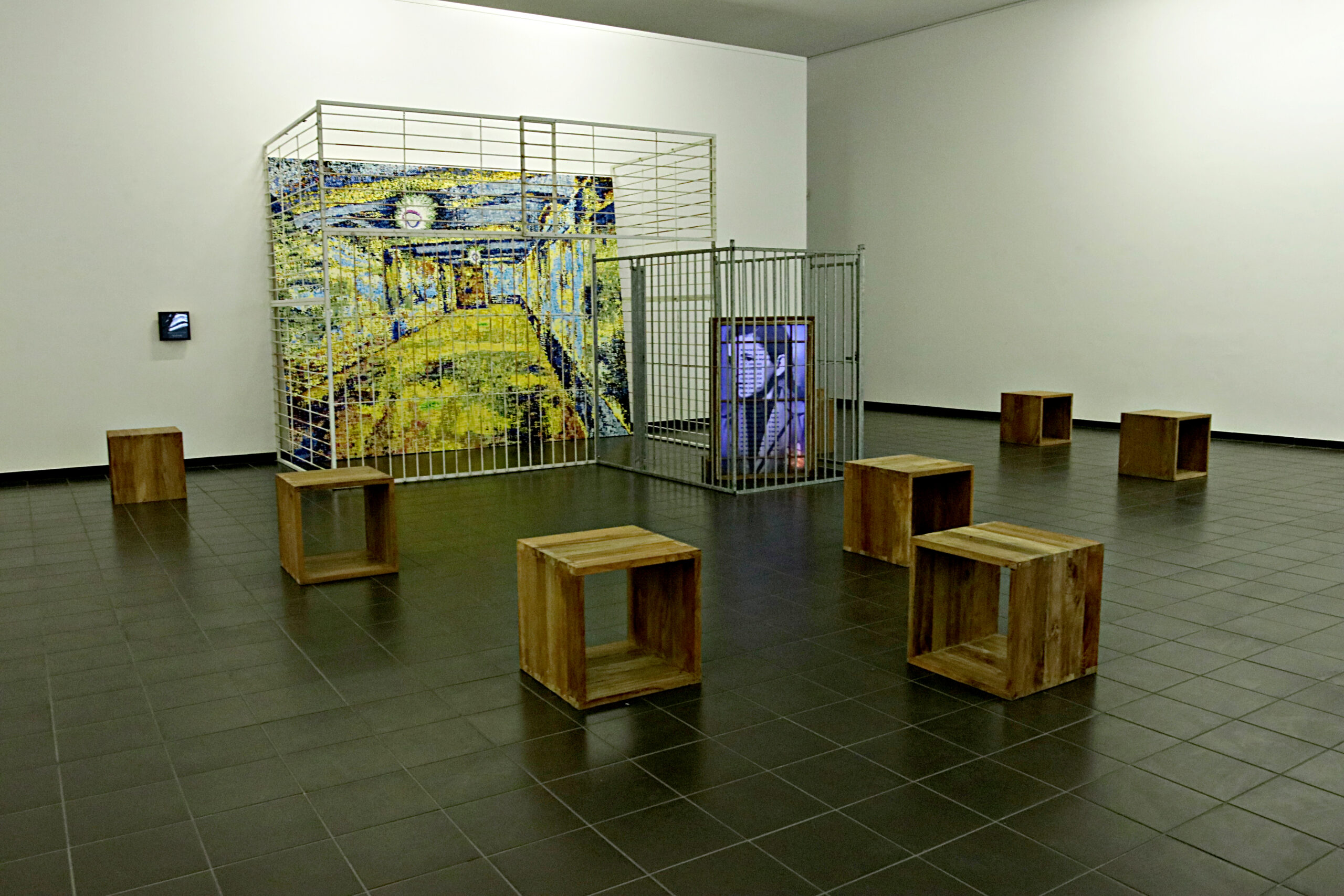
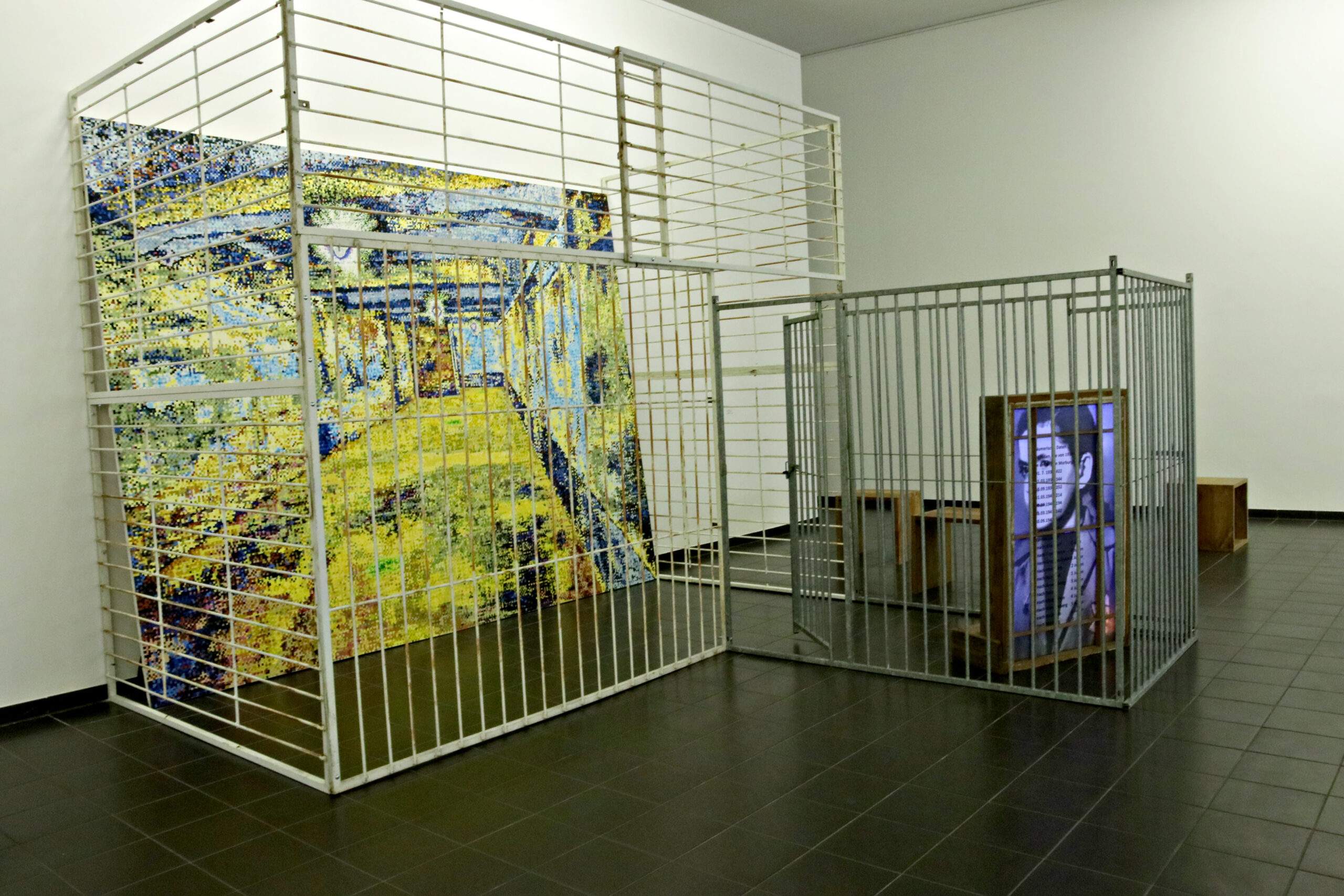
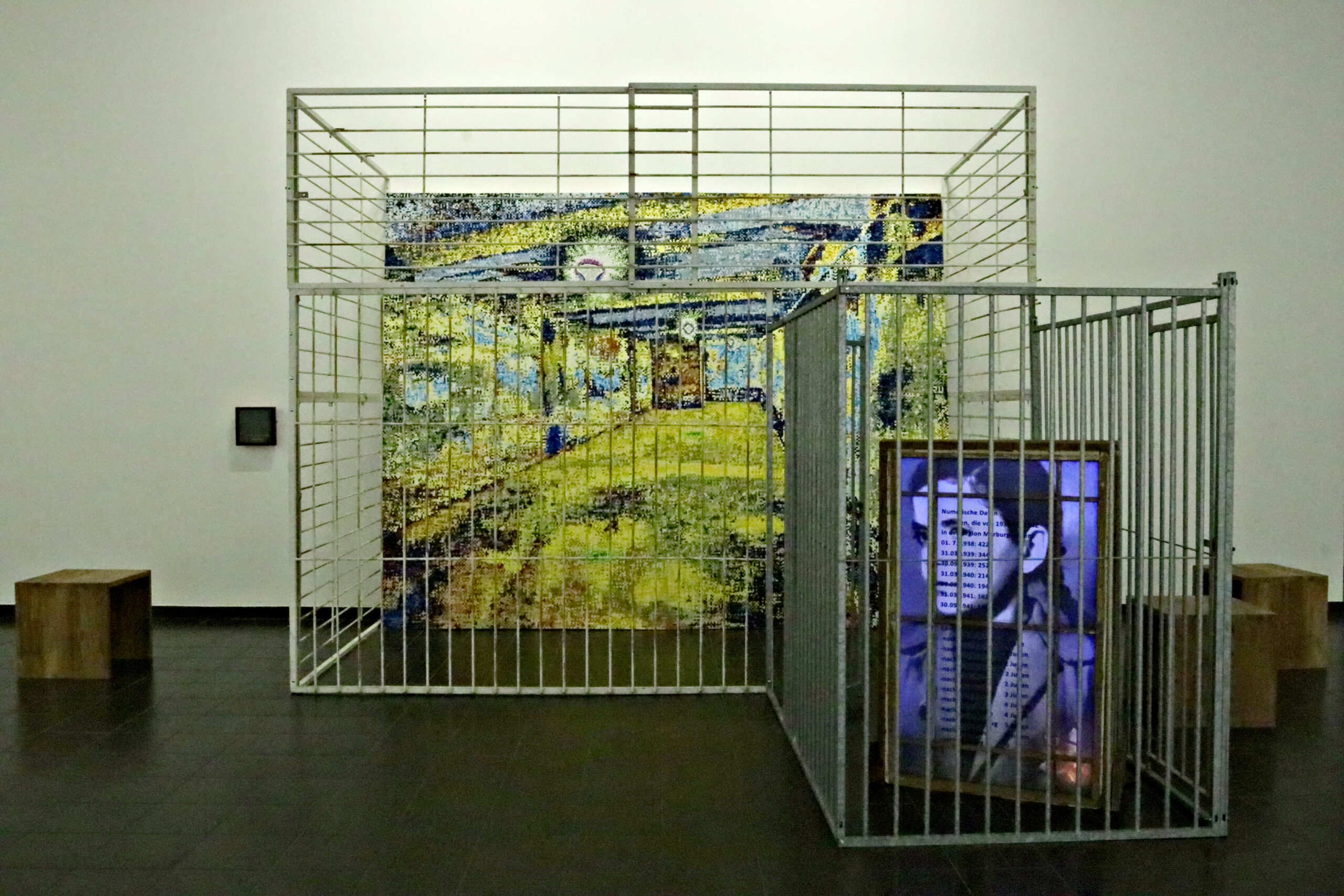
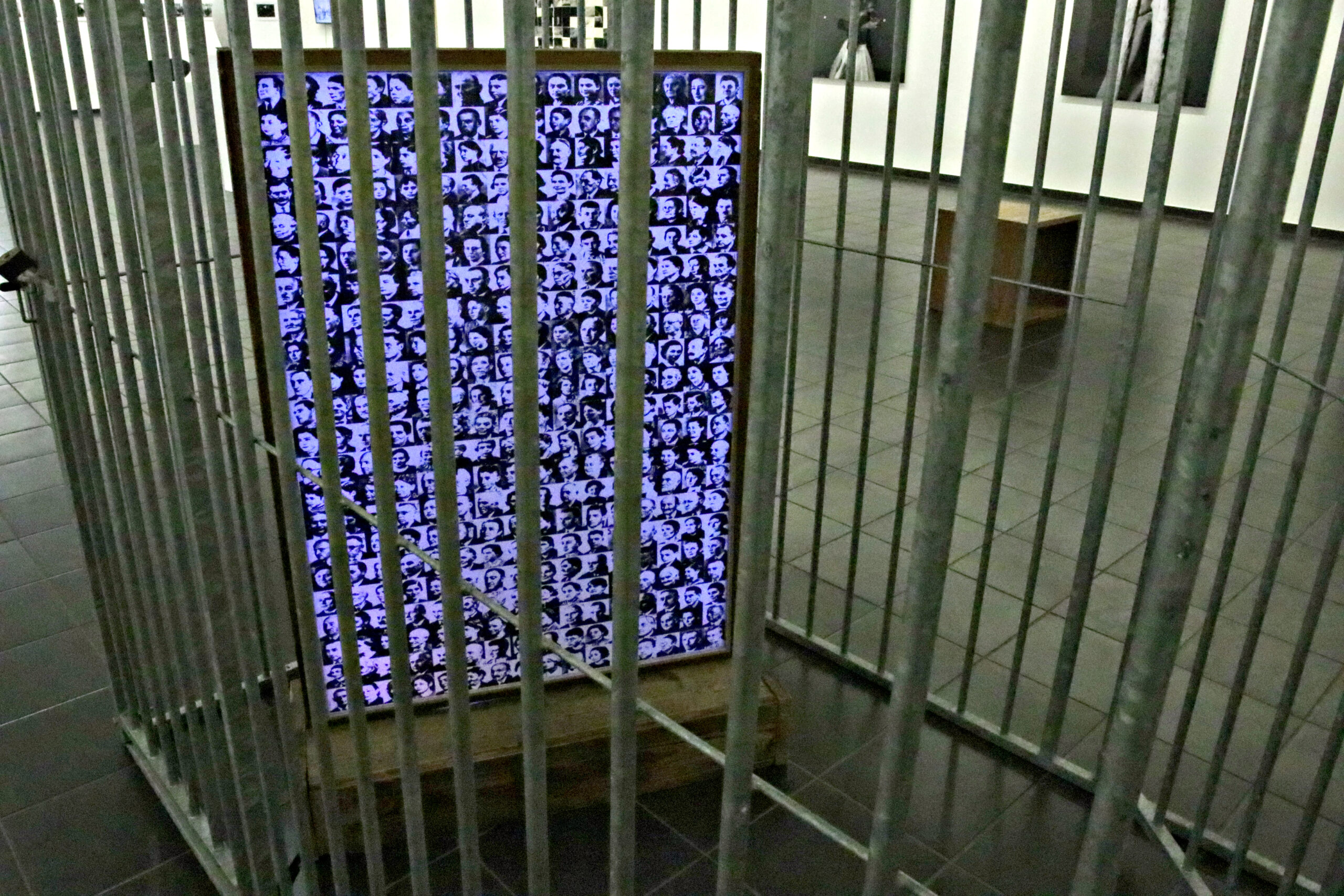
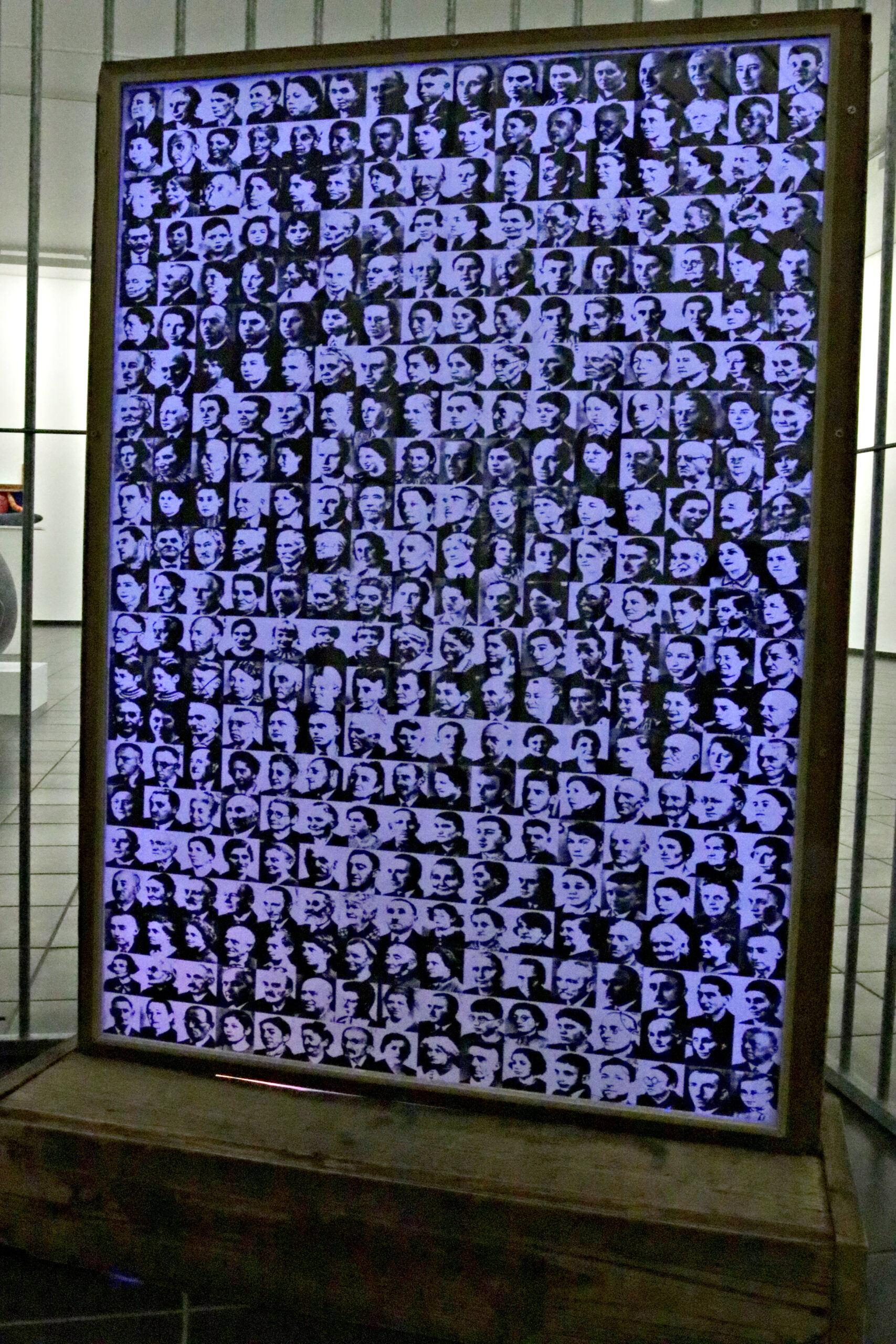
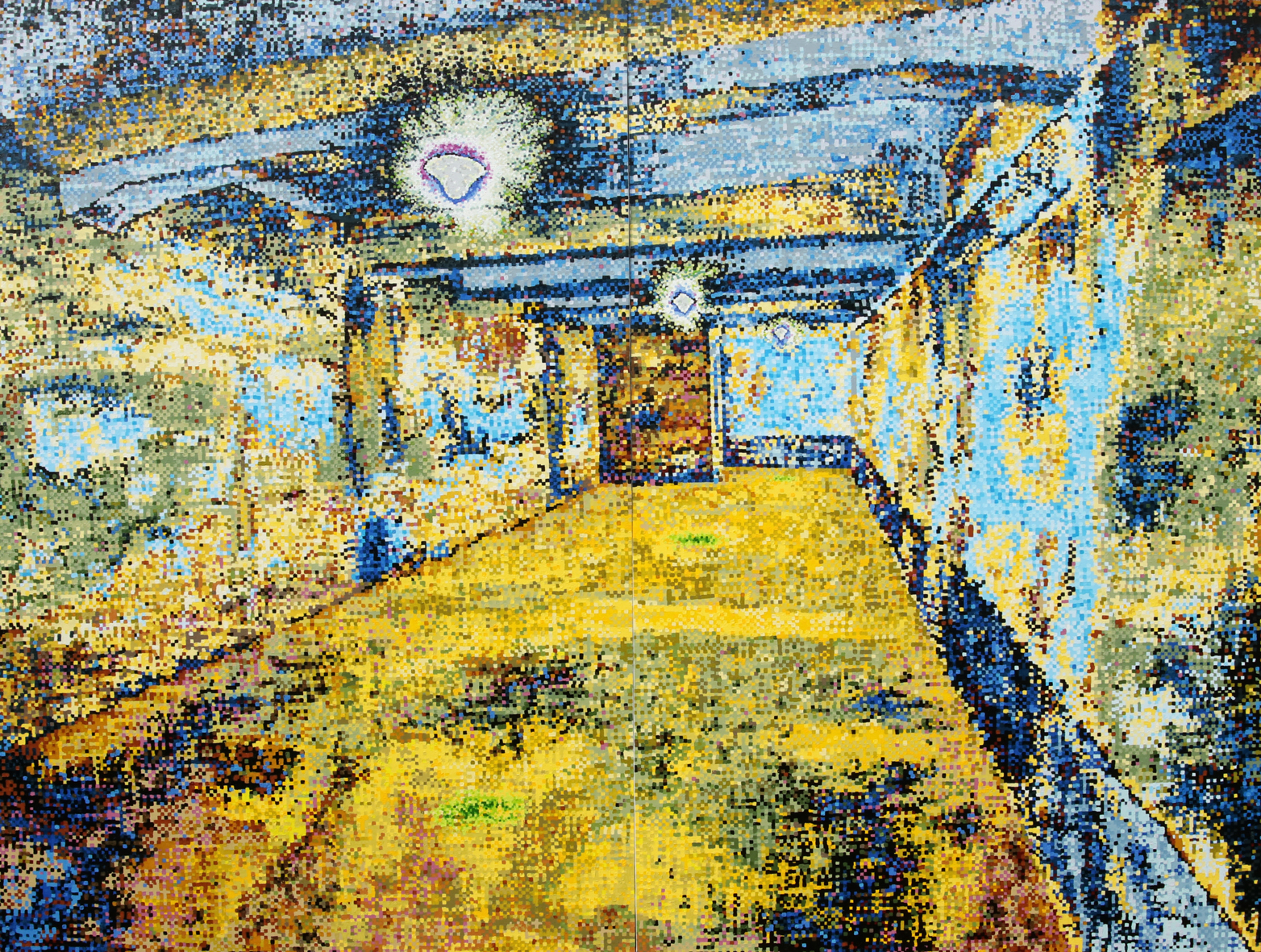
In the project “Erste Hilfe bei Unfällen (First aid in case of accidents),” I am exploring the history of the Jewish community that has lived since the 12th century on the territory of Marburg. Using archival materials, as well as selected artistic tools, I would like to place an emphasis through the ecosystem of contemporary art and to identify the possible prospects of building the social architecture of tomorrow, based on the centuries of acquired experience within the framework of the local context.
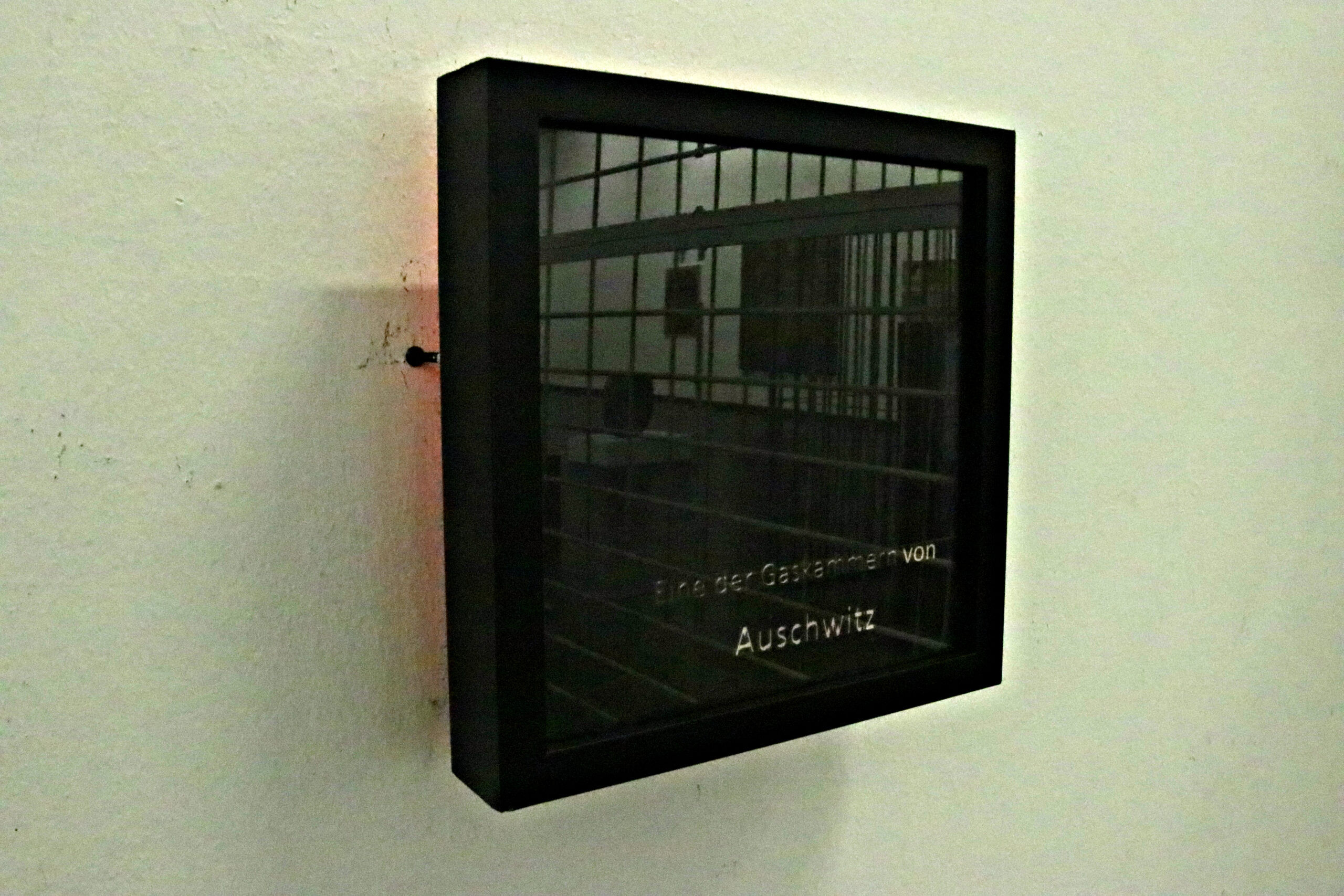
The installation consists from a painting (size of the painting: 3.6m by 2.8m. ), a doublesided light box, sound and interactive light.
2020
“Kunst in Marburg”, Marburger Kunstverein, Marburg (DE)
Special thanks to:
Thomas Koelewijn
Samuel Koelewijn
Jessica Petraccaro-Goertsches
Anna Hakobyan